

Elephants are among the most remarkable animals on Earth. Known for their enormous size, long trunks, impressive memories, and close family bonds, these gentle-looking giants play an important role in the ecosystems where they live.
But elephants are much more than the largest land animals. They communicate through sounds, touch, scent, and even vibrations. They form strong social relationships, work together to protect their young, and spend much of each day searching for food and water.
There are three living elephant species: the African savanna elephant, the African forest elephant, and the Asian elephant. Each has unique physical features, habitats, and behaviors.
In this guide, you’ll discover interesting elephant facts, including what elephants eat, how they communicate, how much water they drink, and how their family groups work.
1. What Is an Elephant?
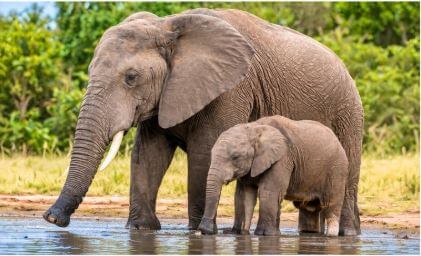
An elephant is a large herbivorous mammal belonging to the family Elephantidae. It is recognized by its massive body, thick legs, large ears, long trunk, and, in many individuals, tusks.
Elephants are native to Africa and Asia. They live in different environments, including savannas, forests, grasslands, wetlands, and some dry regions.
Scientists recognize three living species:
- African savanna elephant (Loxodonta africana): The largest living elephant species, found mainly in sub-Saharan African savannas and other open habitats.
- African forest elephant (Loxodonta cyclotis): A smaller African species adapted to the dense tropical forests of Central and West Africa.
- Asian elephant (Elephas maximus): Found in parts of South and Southeast Asia, often in forests, grasslands, and mixed habitats.
Although these species share many characteristics, they differ in size, ear shape, head structure, tusks, and geographic distribution.
2. 15 Interesting Elephant Facts
Here are 15 fascinating facts that show why elephants are such extraordinary animals.
- Elephants are the largest living land animals. Adult African savanna elephants can reach several tons in weight.
- There are three living elephant species. They are the African savanna elephant, African forest elephant, and Asian elephant.
- An elephant’s trunk is incredibly versatile. It is used for breathing, smelling, drinking, feeding, touching, and communication.
- Elephants are herbivores. Their diet includes grasses, leaves, bark, roots, fruits, and other plant material.
- They spend much of the day eating. Elephants need large amounts of vegetation to support their enormous bodies.
- Elephants live in close family groups. Female elephants and their young often form herds led by an experienced older female.
- Adult males often live separately. They may travel alone or form temporary groups with other males.
- Elephants communicate using low-frequency sounds. Some of their rumbles are too low for humans to hear easily.
- They also communicate through touch and scent. Trunk touches and chemical signals help them recognize and interact with other elephants.
- Their ears help regulate body temperature. Blood flowing through the large ear surfaces helps release heat.
- Elephant tusks are enlarged incisor teeth. They can be used for digging, stripping bark, moving objects, and defense.
- Not every elephant has visible tusks. Many female Asian elephants do not develop large tusks, and tusk development varies among individuals.
- Elephants have long pregnancies. An elephant pregnancy lasts approximately 22 months.
- They help shape their habitats. Their feeding and movement can create clearings, disperse seeds, and change vegetation patterns.
- All three elephant species face conservation challenges. Habitat loss, poaching, and conflict with people threaten their survival.
3. Where Do Elephants Live?
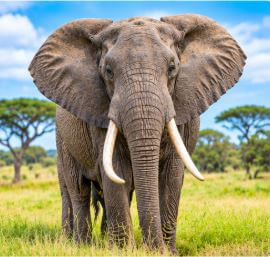
Elephants are found in Africa and Asia, but their habitats differ depending on the species.
African Savanna Elephant Habitat
African savanna elephants live across parts of sub-Saharan Africa.
Their habitats include:
- Open savannas
- Grasslands
- Woodlands
- Shrublands
- Wetlands
- Some dry and semi-arid landscapes
They need large areas to find food, water, and safe routes between seasonal habitats.
African Forest Elephant Habitat
African forest elephants live mainly in the tropical forests of Central and West Africa.
They are generally smaller than savanna elephants and have straighter, downward-pointing tusks. Their smaller size and body shape help them move through dense forest vegetation.
Forest elephants are important seed dispersers. By eating fruits and moving through the forest, they help spread seeds over large distances.
Asian Elephant Habitat
Asian elephants are found in parts of South and Southeast Asia.
They inhabit tropical and subtropical forests, grasslands, and areas where different vegetation types meet.
Their populations are often fragmented because of roads, agriculture, settlements, and other human activities.
Why Do Elephants Need So Much Space?
Elephants eat large quantities of vegetation and need regular access to water. They may travel long distances between feeding areas, water sources, and resting places.
When their habitats become fragmented, elephants may move through farms or settlements while searching for resources. This can increase conflict between people and wildlife.
4. What Do Elephants Eat?
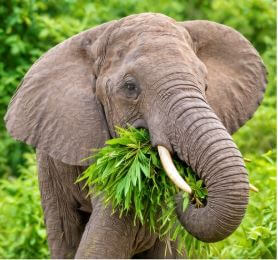
Elephants are herbivores, which means they eat plants rather than hunting other animals.
Their diet changes depending on the species, habitat, season, and availability of vegetation.
Common elephant foods include:
- Grasses
- Leaves
- Tree bark
- Roots
- Fruits
- Twigs and branches
- Shrubs and other vegetation
Elephants use their trunks to pull vegetation from trees, pick up grass, and bring food to their mouths.
How Do Elephants Find Food?
Elephants use their sense of smell, memory, and experience to locate food.
They may travel through familiar areas to find seasonal fruits, fresh grass, leaves, and other preferred plants.
Their feeding behavior can also change with the weather. During dry periods, elephants may rely more heavily on woody vegetation, bark, and roots when fresh grass becomes less available.
How Much Food Does an Elephant Eat Each Day?
The amount varies with body size, species, habitat, and food quality.
Large elephants can consume hundreds of pounds of plant material in a day. Some estimates for adult elephants reach approximately 150 kilograms (330 pounds), although actual intake can vary considerably.
Because their diet is bulky and contains a lot of plant fiber, elephants spend many hours feeding.
5. How Much Water Do Elephants Drink?
Elephants need substantial amounts of water to maintain their large bodies, especially in hot environments.
A large elephant may drink around 30 to 50 gallons (approximately 114 to 189 liters) of water per day, although its needs vary depending on temperature, activity, diet, and water availability.
Elephants use their trunks to suck up water and then release it into their mouths.
How Does an Elephant Drink Water?
An elephant does not normally drink by placing its entire trunk into its mouth.
Instead, it draws water into the trunk, which acts like a flexible container, and then squirts the water into its mouth.
The trunk can also spray water over the elephant’s body, helping it cool down and clean its skin.
Can Elephants Go Without Water?
Elephants depend heavily on access to water. They may travel long distances to reach rivers, lakes, waterholes, and other sources.
During droughts, limited water availability can affect their movement, feeding opportunities, and survival.
This is one reason why protecting water sources and migration routes is important for elephant conservation.
6. How Do Elephants Communicate?
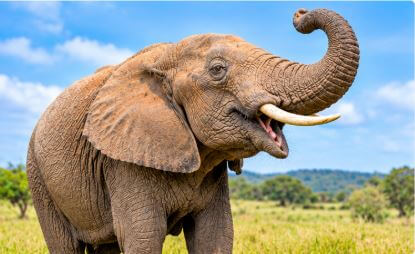
Elephants have a complex communication system. They use sounds, body movements, touch, scent, and ground vibrations to exchange information.
Their communication helps maintain family relationships, coordinate group movement, identify other elephants, and respond to danger.
Low-Frequency Rumbles
Elephants produce low-frequency calls known as infrasonic sounds.
Some of these sounds are below the range of normal human hearing. They can travel long distances and help elephants remain in contact when members of a herd are spread out.
Trumpeting and Other Calls
Elephants also produce sounds that humans can hear, including:
- Trumpets
- Rumbles
- Roars
- Squeaks
- Grunts
Different sounds may be associated with excitement, alarm, social interactions, or other situations.
Touch and Body Language
Elephants frequently use their trunks to touch one another.
A trunk touch may help an elephant greet a family member, comfort a calf, investigate another individual, or communicate during social interactions.
Their ears, posture, head movements, and trunk position can also provide information about their behavior and emotional state.
Scent Communication
Elephants have a strong sense of smell.
They use scent to gather information about other elephants, including their identity and reproductive condition. Smell also helps them investigate their environment and detect potential dangers.
7. How Do Elephant Herds Work?
Elephants are highly social animals. Female elephants and their offspring often live in family groups that cooperate to find food, protect calves, and respond to threats.
The Role of the Matriarch
In many African savanna and Asian elephant family groups, an experienced older female leads the herd.
She is commonly called the matriarch.
The matriarch’s experience can help the group recognize familiar routes, locate water, and respond to environmental challenges.
Her knowledge may be especially valuable during droughts or other difficult conditions.
How Do Elephants Protect Their Young?
Elephant calves depend on their mothers and other members of the family group.
Adult females may stay close to calves, forming protective positions when danger approaches.
Older sisters, aunts, and other related females can also play important roles in caring for young elephants.
Do Male Elephants Live in Herds?
Adult male elephants often leave their maternal family groups as they mature.
Some males travel alone, while others form loose bachelor groups with other males.
They may also join female herds temporarily, particularly during breeding periods.
8. Why Do Elephants Have Such Large Ears?
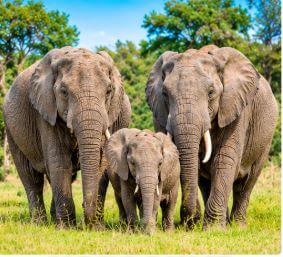
Elephants have large ears that play an important role in regulating body temperature.
Their ears contain many blood vessels close to the surface. When blood circulates through these vessels, heat can escape into the surrounding air.
How Do Elephants Cool Themselves?
Elephants use several behaviors to manage heat:
- Flapping their ears to increase air movement
- Seeking shade during the hottest parts of the day
- Spraying water over their bodies
- Covering their skin with mud or dust
- Resting during periods of extreme heat
Their large ears are especially useful in hot African environments.
Asian elephants generally have smaller ears than African elephants, reflecting differences in their evolutionary history and physical adaptations.
9. What Are Elephant Tusks Used For?
Elephant tusks are enlarged incisor teeth that continue growing throughout an elephant’s life.
Not all elephants develop large visible tusks. Tusk development varies between species, sexes, and individual animals.
Elephants may use their tusks for:
- Digging for roots and water
- Removing bark from trees
- Moving branches and other objects
- Defense against threats
- Competition between males
Tusks are made of ivory, which has unfortunately made elephants targets of illegal wildlife trade.
Poaching for ivory remains a serious conservation threat.
10. How Intelligent Are Elephants?
Elephants are known for their advanced social behavior, learning abilities, and impressive memory.
They can recognize familiar individuals, remember important locations, and learn from experience.
Older elephants may help guide their family groups because they have knowledge of seasonal food and water sources.
Researchers have also documented behaviors involving cooperation, problem-solving, exploration, and responses to injured or dead companions.
However, intelligence is difficult to measure across different species. It is more accurate to describe specific abilities and behaviors than to claim that one animal is simply smarter than another.
11. Why Are Elephants Important to the Ecosystem?
Elephants are often described as ecosystem engineers because their activities can influence the structure of their habitats.
Their feeding, movement, and interactions with vegetation can affect many other species.
Seed Dispersal
Elephants eat fruits and later deposit seeds in their dung.
This helps spread some plant species across large areas and supports forest regeneration.
Creating Habitat Openings
In certain environments, elephants break branches, push down vegetation, and create openings in dense plant growth.
These changes can create opportunities for grasses and other plants to grow.
Supporting Other Wildlife
Elephants may open pathways through dense vegetation and help create access to water sources.
Their activities can influence the availability of food and shelter for other animals.
Healthy elephant populations are therefore important not only for the elephants themselves but also for the ecosystems they inhabit.
12. Are Elephants Endangered?
All three living elephant species face conservation challenges, but their conservation status is not identical.
The African savanna elephant is classified as Endangered, the African forest elephant as Critically Endangered, and the Asian elephant as Endangered on the IUCN Red List assessments published in 2021.
These assessments highlight serious pressures on elephant populations.
Major Threats to Elephants
1. Poaching and Illegal Ivory Trade
Elephants are killed for their ivory tusks. Illegal trade continues to put pressure on populations, particularly where law enforcement and protection are limited.
2. Habitat Loss
Forests, grasslands, and other natural habitats are being converted for agriculture, infrastructure, and human settlements.
3. Habitat Fragmentation
Roads, fences, and development can separate elephant populations and block traditional movement routes.
4. Human-Elephant Conflict
Elephants sometimes enter farms while searching for food. This can damage crops and create dangerous encounters between people and wildlife.
5. Climate and Water Stress
Drought and changing environmental conditions can reduce access to food and water, placing additional pressure on elephant populations.
How Can Elephants Be Protected?
Elephant conservation requires long-term cooperation between governments, scientists, conservation organizations, and local communities.
Important actions include:
- Protecting natural habitats and migration corridors
- Preventing poaching and illegal ivory trafficking
- Supporting communities affected by human-elephant conflict
- Protecting forest and savanna ecosystems
- Monitoring elephant populations through research
- Promoting responsible wildlife tourism and conservation education
Protecting elephants also helps preserve the wider ecosystems that support many other species.
13. Frequently Asked Questions About Elephants
How many species of elephants are there?
There are three living elephant species: the African savanna elephant, African forest elephant, and Asian elephant.
What do elephants eat?
Elephants are herbivores. They eat grasses, leaves, bark, roots, fruits, twigs, and other plant material.
How much water does an elephant drink per day?
A large elephant may drink around 30 to 50 gallons of water per day. Its actual needs depend on body size, temperature, activity, and food availability.
How do elephants communicate with each other?
Elephants communicate through low-frequency sounds, trumpets, body language, touch, scent, and possibly ground vibrations.
Why do elephants flap their ears?
Elephants flap their ears to help release body heat. Ear movement also occurs during communication and other social behaviors.
How long is an elephant pregnant?
An elephant’s pregnancy lasts approximately 22 months, making it one of the longest gestation periods among mammals.
Do elephants have good memories?
Elephants can remember familiar individuals, locations, and environmental information. Memory is an important part of their social lives and survival.
Are elephants afraid of mice?
There is no strong scientific evidence that elephants have a special fear of mice. Their reactions to small animals are better understood as responses to unexpected movement or unfamiliar situations.
Can elephants swim?
Yes. Elephants are capable swimmers. They can use their trunks as snorkels when swimming in deeper water.
Are elephants endangered?
The three elephant species have different conservation classifications. African savanna elephants and Asian elephants are classified as Endangered, while African forest elephants are Critically Endangered on the IUCN Red List assessments published in 2021.
Conclusion
Elephants are remarkable mammals with complex social relationships, impressive communication abilities, and important ecological roles.
Their trunks help them feed, drink, smell, and interact with the world. Their family groups provide protection and support for young calves, while experienced matriarchs help guide herds through changing environments.
Elephants also shape the landscapes they inhabit by dispersing seeds, changing vegetation, and creating opportunities for other wildlife.
Yet habitat loss, poaching, and conflict with people continue to threaten their future. Understanding elephant facts helps us appreciate why protecting these animals and their habitats matters.
By supporting responsible conservation efforts, we can help ensure that elephants continue to play their essential role in the natural world.
References
The following scientific and educational resources were consulted for information about elephant biology, diet, communication, social behavior, habitat, and conservation.
- Smithsonian’s National Zoo & Conservation Biology Institute. Asian Elephant.
https://nationalzoo.si.edu/animals/asian-elephant - African Wildlife Foundation. Elephant.
https://www.awf.org/wildlife-conservation/elephant - World Wildlife Fund (WWF). Our Top 10 Facts About Elephants.
https://www.wwf.org.uk/learn/fascinating-facts/elephants - World Wildlife Fund (WWF). Elephant.
https://www.worldwildlife.org/species/elephant/ - Smithsonian’s National Zoo & Conservation Biology Institute. Elephant FAQs.
https://www.nationalzoo.si.edu/animals/asian-elephant-faqs - San Diego Zoo Wildlife Explorers. African Elephant Fact Sheet – Diet and Feeding.
https://ielc.libguides.com/sdzg/factsheets/african_elephant/diet