

Leopards are among the most adaptable and fascinating big cats in the world. Known for their beautiful spotted coats, powerful bodies, and incredible climbing skills, these elusive predators can survive in a wide range of environments, from African grasslands to Asian forests and rugged mountains.
Unlike lions, leopards usually live and hunt alone. They rely on stealth, patience, and strength to catch prey, often dragging their meals into trees to keep them away from other predators.
But how much do you really know about these remarkable animals?
In this guide, you’ll discover interesting leopard facts, including where leopards live, what they eat, how they hunt, and the special adaptations that help them survive in the wild.
1. What Is a Leopard?
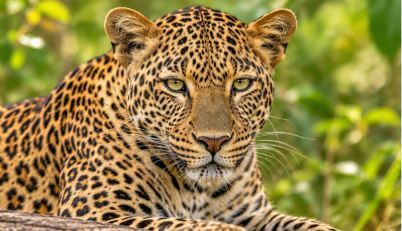
The leopard (Panthera pardus) is a large wild cat belonging to the family Felidae and the genus Panthera. It is closely related to lions, tigers, and jaguars.
Leopards are known for their golden or yellowish coats covered with dark, flower-shaped markings called rosettes. These patterns help them blend into their surroundings, making it easier to approach prey without being noticed.
Although leopards are powerful predators, they are generally smaller than lions and tigers. Their bodies are muscular and flexible, with strong legs, sharp claws, and a long tail that helps them maintain balance while climbing.
One of the leopard’s most impressive qualities is its adaptability. It can live in different climates and habitats, provided there is enough food, water, and suitable cover.
2. 15 Interesting Leopard Facts
Here are 15 fascinating facts that reveal what makes leopards such successful wild predators.
- Leopards are excellent climbers. They can climb trees with remarkable agility and often rest on branches.
- Their spots are called rosettes. These dark markings help break up the outline of their bodies in natural surroundings.
- Most leopards live alone. Adults are generally solitary, except during mating or when females are raising cubs.
- They are powerful hunters. Leopards use stealth and short bursts of speed to catch prey.
- They often store food in trees. This helps protect their kills from scavengers such as hyenas.
- They can live in many habitats. Leopards are found in forests, grasslands, mountains, scrublands, and some desert regions.
- They are mostly active at night. Many leopards hunt after sunset, although activity patterns vary by location.
- They have a varied diet. Their prey can include antelope, deer, monkeys, rodents, birds, and other animals.
- They are strong swimmers. Leopards can swim when necessary and are comfortable around water.
- Their tails help with balance. A long, muscular tail helps them move through trees and across uneven ground.
- Black panthers can be leopards. In some regions, leopards have a genetic condition called melanism that gives their coats a very dark appearance.
- They communicate through scent. Urine, scratches, and other scent marks help identify territories.
- Females raise their cubs alone. Mothers protect, feed, and teach their young without a permanent partner.
- Leopards can take down surprisingly large prey. Their strength allows them to hunt animals heavier than themselves in some circumstances.
- Some leopard populations are seriously threatened. Habitat loss, declining prey, poaching, and conflict with people put pressure on the species.
3. Where Do Leopards Live?
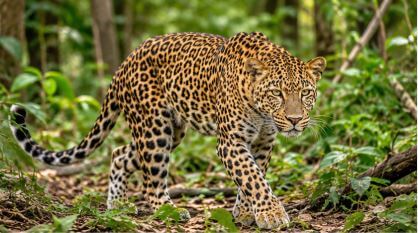
Leopards have one of the widest natural distributions among wild cats. They are found across parts of Africa and Asia, although their populations have disappeared from many areas where they once lived.
Their range includes parts of sub-Saharan Africa, the Arabian Peninsula, India, Sri Lanka, Southeast Asia, and the Russian Far East.
African Habitats
In Africa, leopards live in a variety of environments, including:
- Savannas and open woodlands
- Tropical and subtropical forests
- Rocky hills and mountainous regions
- Bushland and dense vegetation
- Semi-desert and some desert environments
African leopards often use areas with thick vegetation, rocky outcrops, or trees where they can hide, rest, and ambush prey.
Asian Habitats
Across Asia, leopards occupy forests, grasslands, scrublands, and mountainous landscapes.
Some populations live in relatively warm tropical environments, while others survive in colder regions. The Amur leopard, for example, lives in the Russian Far East and nearby northeastern China, where winters can be extremely cold.
The ability to adapt to different environments is one reason leopards have been able to survive across such a large geographic range.
4. What Do Leopards Eat?
Leopards are carnivores, meaning they eat other animals to obtain the nutrients and energy they need.
They are opportunistic hunters, so their diet depends on what prey is available in their habitat.
Common leopard prey includes:
- Antelope and gazelles
- Deer
- Wild pigs and warthogs
- Monkeys and other primates
- Hares and rodents
- Birds
- Reptiles and other small animals
In some regions, leopards may also prey on livestock. This can bring them into conflict with nearby communities, particularly where natural prey is becoming scarce.
How Do Leopards Choose Their Prey?
Leopards often target animals they can approach without being detected. They may select prey based on size, availability, and the amount of cover in the surrounding environment.
Rather than chasing animals over long distances, they usually depend on surprise and a close-range attack.
Their flexible diet helps them survive in habitats where the types and numbers of prey animals change throughout the year.
5. How Do Leopards Hunt?
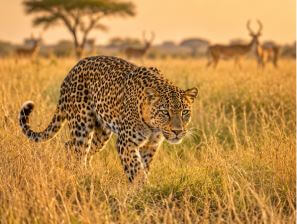
Leopards are stealth hunters. Their success depends on patience, camouflage, and the ability to get close to prey before launching an attack.
A typical hunt may involve several stages:
Step 1: Finding Prey
A leopard uses its sharp eyesight and hearing to detect nearby animals. It may watch from cover, a rocky position, or even a tree.
Step 2: Stalking Quietly
Once it identifies a target, the leopard moves slowly and carefully. It often stays low to the ground, using grass, bushes, and uneven terrain to remain hidden.
Step 3: Launching an Attack
When it gets close enough, the leopard makes a sudden rush or pounce. Its strong legs and powerful forelimbs help it grab and overpower the animal.
Step 4: Securing the Kill
After catching prey, a leopard may move the carcass to a secluded location. If the prey is small enough, it may carry or drag it into a tree.
This behavior can reduce the chance of losing food to scavengers or competing predators.
6. Why Do Leopards Climb Trees?
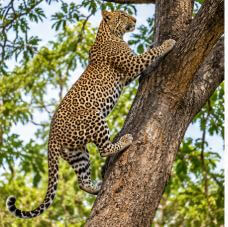
One of the best-known leopard behaviors is carrying prey into trees.
Leopards are exceptionally agile climbers. Their strong limbs, muscular shoulders, sharp claws, and flexible bodies help them move up tree trunks and along branches.
There are several reasons they climb trees:
- Protecting food: A carcass stored above the ground can be harder for some scavengers to reach.
- Resting safely: Trees can provide a quiet place to sleep away from disturbances.
- Watching their surroundings: Elevated positions can help leopards observe potential prey or danger.
- Avoiding competition: In areas where larger predators are present, climbing may help reduce direct encounters.
However, leopards do not always take their kills into trees. Their behavior depends on the size of the prey, the type of habitat, and the presence of other animals.
7. Leopard Behavior and Social Life
Leopards are generally solitary animals. Unlike lions, which often live in social groups called prides, adult leopards usually spend most of their time alone.
Each leopard uses a home range that may overlap with the ranges of other individuals. The size of these ranges depends on factors such as prey availability, habitat quality, and population density.
How Do Leopards Communicate?
Although they are often difficult to see, leopards communicate in several ways.
They use scent marking, scratching, vocalizations, and body language.
Common forms of communication include:
- Urine and scent marks
- Scratches on trees and other surfaces
- Vocal calls, including rough, rasping sounds
- Visual signals and body posture
These signals help leopards communicate their presence and reduce unnecessary encounters with other adults.
Are Leopards Nocturnal?
Many leopards are most active around dusk, during the night, and before sunrise. However, they are not strictly nocturnal.
Their activity patterns can change depending on human activity, local conditions, prey behavior, and competition from other predators.
In areas with little human disturbance, some leopards may also be active during daylight hours.
8. Leopard Cubs and Reproduction

Female leopards usually give birth in a hidden location, such as dense vegetation, a rocky shelter, or a secluded den.
A litter commonly contains two or three cubs, although litter size can vary.
Newborn cubs are vulnerable and depend entirely on their mother for protection and food.
During their early development, the mother keeps them hidden and moves them between safe locations when necessary.
As they grow, cubs begin exploring their surroundings and practicing behaviors such as stalking, pouncing, and chasing. These activities help them develop the skills they will eventually need to hunt.
Young leopards remain with their mother for an extended period before becoming independent. The exact timing varies with habitat conditions and individual development.
9. What Is a Black Leopard?
A black leopard is a leopard with an unusually dark coat caused by a genetic condition called melanism.
Melanistic leopards are often called black panthers. However, the term “black panther” does not describe a separate species.
Although their coats may look completely black from a distance, their rosette patterns can often still be seen under the right lighting.
Black leopards have been documented in parts of Asia and Africa. Their dark coloration may be more noticeable in certain forest environments.
It is important to remember that a black leopard is still the same species as a normally colored leopard: Panthera pardus.
10. Leopard vs. Jaguar: What Is the Difference?
Leopards and jaguars look similar because both have golden coats covered with dark rosettes. However, they are different species and live in different parts of the world.
| Feature | Leopard | Jaguar |
|---|---|---|
| Scientific name | Panthera pardus | Panthera onca |
| Natural range | Africa and Asia | Central and South America |
| Body shape | Generally slimmer and more slender | Usually stockier and more muscular |
| Rosettes | Usually smaller and do not contain central spots | Often larger, with central spots |
| Climbing | Excellent climber | Can climb, but is more strongly associated with ground-based movement |
| Swimming | Capable swimmer | Particularly comfortable around water |
A useful identification tip is to look closely at the rosettes. Jaguar rosettes often contain one or more small spots inside, while leopard rosettes generally do not.
11. Are Leopards Endangered?
The leopard is classified as Vulnerable on the IUCN Red List at the species level. However, conservation conditions vary significantly among different leopard populations and subspecies.
Several major threats affect leopards:
Habitat Loss and Fragmentation
Forests, grasslands, and other natural habitats are increasingly affected by agriculture, roads, settlements, and other forms of development.
When habitats become fragmented, leopards may have less space to move, hunt, and find mates.
Declining Prey Populations
Leopards depend on healthy populations of wild prey. Overhunting and habitat changes can reduce the number of animals available for food.
Human-Wildlife Conflict
Leopards sometimes kill livestock, especially when natural prey is scarce or settlements expand into their habitats.
In response, people may kill leopards to protect animals and livelihoods.
Poaching and Illegal Wildlife Trade
Leopards may be targeted for their skins and other body parts. Illegal trade and poorly managed hunting can place additional pressure on already vulnerable populations.
How Can Leopards Be Protected?
Leopard conservation requires cooperation between governments, scientists, conservation organizations, and local communities.
Important conservation measures include:
- Protecting forests, grasslands, and wildlife corridors
- Reducing illegal hunting and wildlife trafficking
- Maintaining healthy populations of natural prey
- Supporting communities living near leopard habitats
- Improving livestock protection and reducing conflict
- Monitoring wild populations through scientific research
Protecting leopards also helps conserve the wider ecosystems they depend on.
12. Frequently Asked Questions About Leopards
How fast can a leopard run?
Leopards are capable of running at high speeds over short distances. However, they are ambush predators and usually rely more on stealth and surprise than on long-distance pursuit.
Where do leopards live?
Leopards live in parts of Africa and Asia. Their habitats include forests, savannas, grasslands, mountains, scrublands, and some desert regions.
What do leopards eat?
Leopards eat a wide variety of animals, including antelope, deer, wild pigs, monkeys, rodents, birds, and reptiles. Their diet depends on local prey availability.
Are leopards dangerous to humans?
Leopards are wild predators and can be dangerous, particularly if they feel threatened, are injured, or are protecting their cubs. People should never approach or attempt to feed a wild leopard.
Do leopards live in groups?
No. Adult leopards are generally solitary. Females spend time with their cubs, while adults may come together temporarily to mate.
Why do leopards have spots?
Their rosette patterns provide camouflage. The markings help break up the shape of their bodies, making them harder to detect in vegetation, forests, and other natural environments.
Are black panthers leopards?
Some black panthers are melanistic leopards. The term “black panther” can also refer to melanistic jaguars, depending on the region.
Are leopards and snow leopards the same animal?
No. Leopards and snow leopards are different species. The snow leopard belongs to a separate species, Panthera uncia, and is specially adapted to high mountain environments in Central and South Asia.
Conclusion
Leopards are remarkable big cats that combine strength, agility, intelligence, and adaptability. Their spotted coats provide camouflage, their powerful bodies make them effective hunters, and their climbing skills help them protect food and find safe places to rest.
From African savannas to Asian mountain forests, leopards have adapted to a wide range of environments. Yet habitat loss, declining prey, poaching, and conflict with people continue to threaten many populations.
Learning about leopard facts is more than discovering the abilities of an impressive predator. It is also a reminder of why protecting wild habitats and supporting conservation efforts matter.
By conserving leopards, we help protect the ecosystems and wildlife communities that share their home.
## References
1. IUCN SSC Cat Specialist Group. Living Species – Leopard.
https://www.catsg.org/living-species-leopard
2. San Diego Zoo Wildlife Alliance. Leopard.
https://animals.sandiegozoo.org/animals/leopard
3. African Wildlife Foundation. Leopard.
https://www.awf.org/wildlife-conservation/leopard
4. National Geographic. Leopard.
https://www.nationalgeographic.com/animals/mammals/facts/leopard