

Updated: July 16, 2026
Canada’s 2026 wildfire season has intensified rapidly in July, with hundreds of active wildfires burning across several provinces. Thick wildfire smoke has significantly reduced air quality across Ontario and spread into large parts of the United States, prompting health advisories and emergency responses.
Although the season began more slowly than previous years, officials warn that rising temperatures and prolonged dry conditions have dramatically increased wildfire activity during the past few weeks.
Contents
More Than 800 Active Wildfires Across Canada
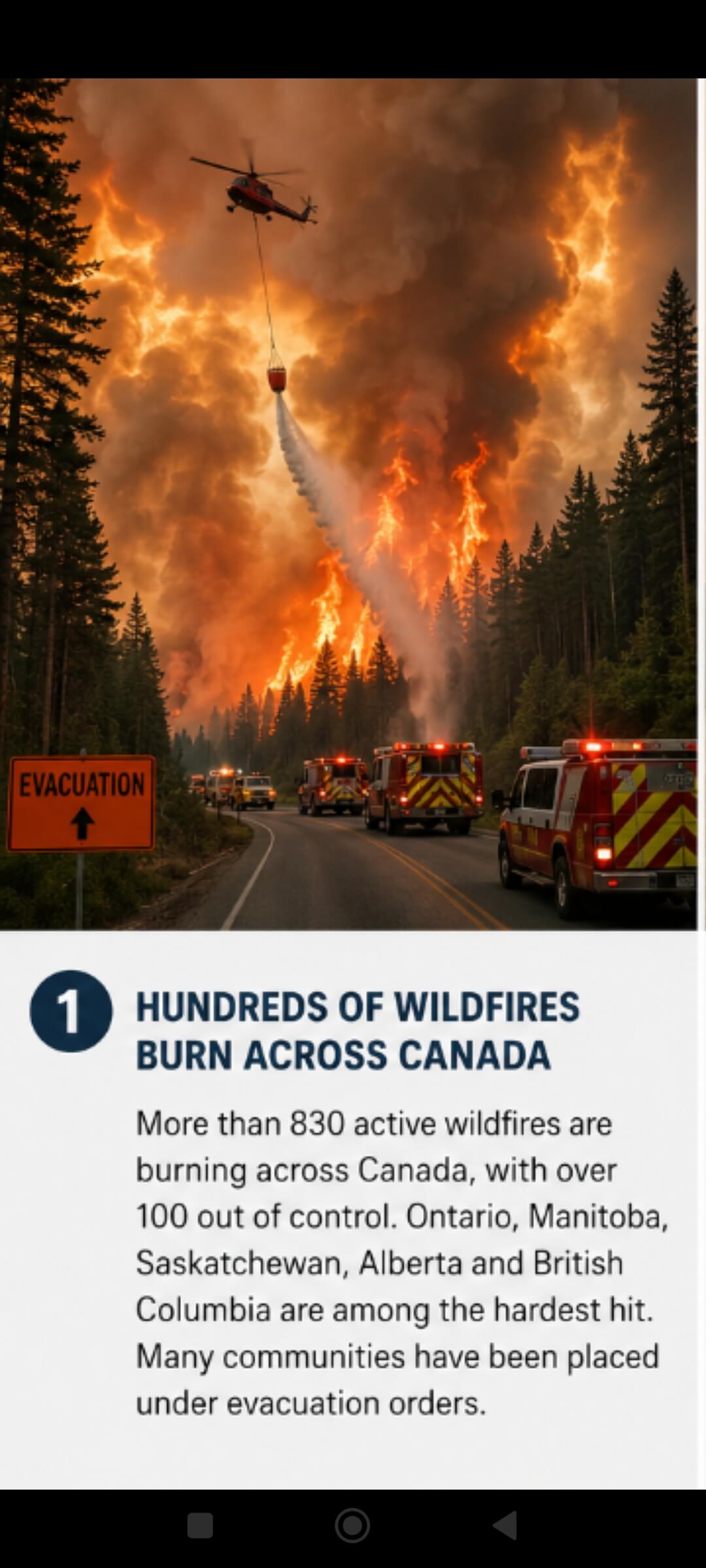
According to the latest national wildfire reports, Canada is currently battling more than 830 active wildfires, with over 100 fires classified as out of control.
The most heavily affected provinces include:
Ontario
Manitoba
Saskatchewan
Alberta
British Columbia
Many remote communities, including several Indigenous First Nations, have received evacuation orders as fires continue to threaten homes, infrastructure, and transportation routes.
Toronto Records Some of the World’s Worst Air Quality
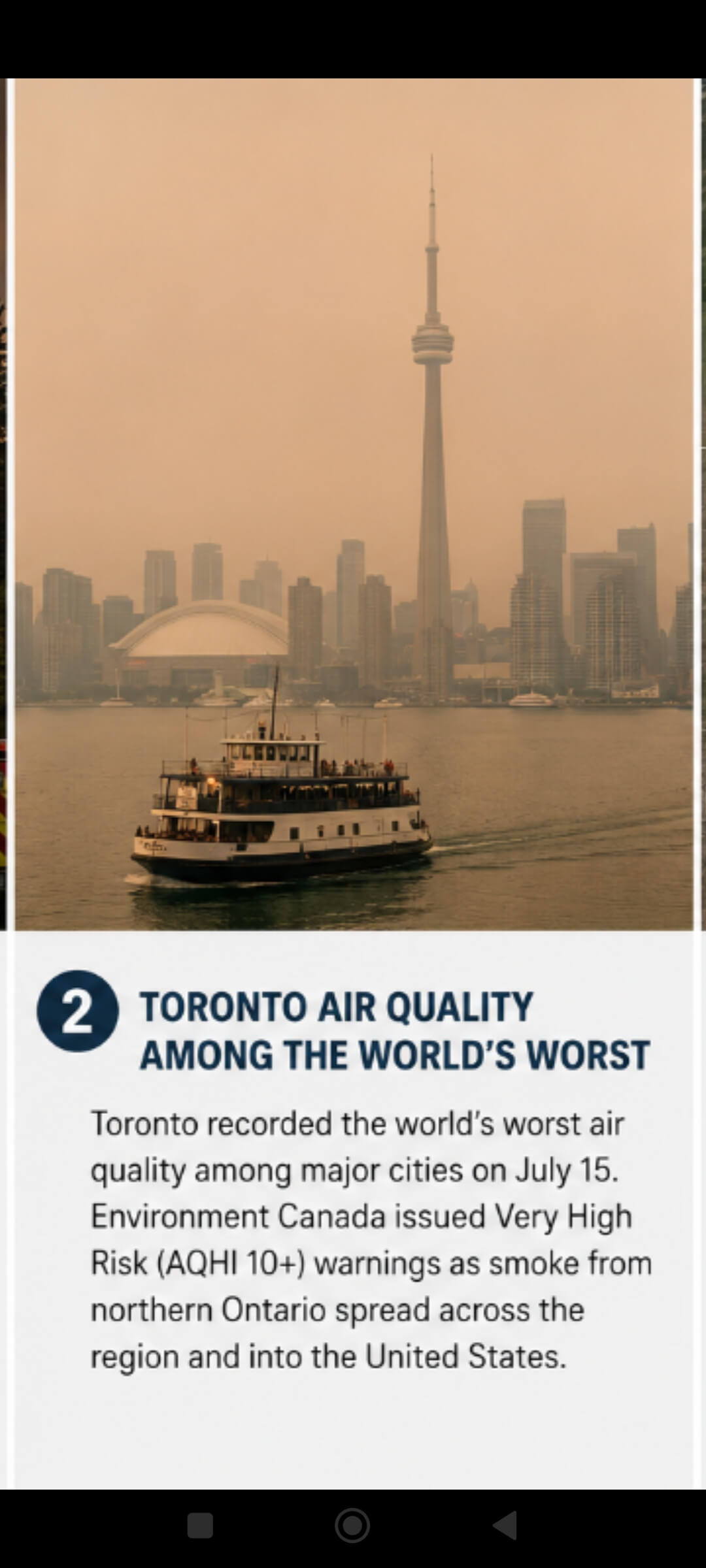
One of the most visible impacts of the 2026 wildfire season has been the severe deterioration of air quality in Toronto.
On July 15, Toronto temporarily recorded the worst air quality among major cities worldwide, according to IQAir, as dense smoke from northern Ontario blanketed the city.
Environment Canada issued Very High Risk (AQHI 10+) air quality warnings, urging residents to:
Stay indoors whenever possible
Keep windows closed
Use HEPA air filtration if available
Wear properly fitted N95 respirators outdoors when necessary
Avoid strenuous outdoor activities
The hazardous smoke also spread into parts of New York, Michigan, Minnesota, Wisconsin, and other northeastern U.S. states.
Evacuations Continue Across Northern Communities
Emergency evacuations remain underway across multiple regions of northern Ontario.
Several First Nations communities have relocated residents due to rapidly advancing fires, while transportation services have been disrupted in some areas.
A widely shared video showing a Canadian National freight train surrounded by flames near Armstrong, Ontario, highlighted the intensity of the fires, although the crew was safely evacuated.
Smoke Reaches the United States
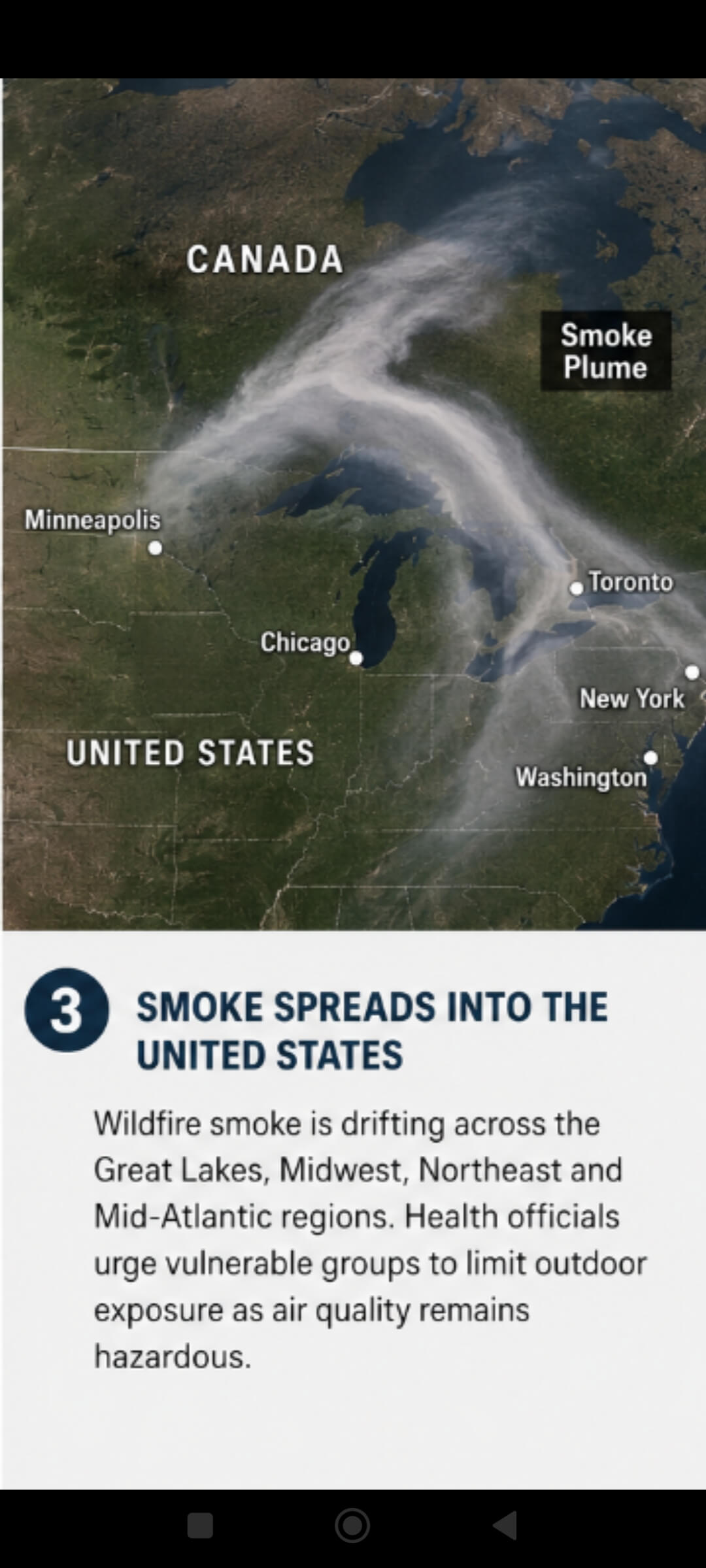
Wildfire smoke is no longer limited to Canada.
Meteorologists expect smoke plumes to continue drifting across the Great Lakes, Midwest, Northeast, and Mid-Atlantic regions of the United States over the coming days.
Health officials recommend that vulnerable populations—including children, older adults, pregnant women, and individuals with heart or lung diseases—limit outdoor exposure until air quality improves.
Government Response
The Government of Canada continues coordinating firefighting resources across provinces while monitoring wildfire risks through the Canadian Wildland Fire Information System.
Federal officials note that although total wildfire activity remains below the five-year average for this point in the season, fire danger is expected to increase as summer progresses because of warmer and drier weather conditions.
Outlook
Forecasters expect wildfire conditions to remain highly volatile through the remainder of July.
With hot temperatures, low humidity, and limited rainfall forecast for several fire-prone regions, emergency agencies warn that additional evacuations and deteriorating air quality remain possible in both Canada and neighboring U.S. states.
References
Government of Canada – July 2026 Wildfire Update
Government of Canada Wildfire Update�
Reuters – Canadian Wildfire Smoke Chokes Toronto
Reuters: Canadian Wildfire Smoke Chokes Toronto�
NASA Earth Observatory – Ontario Wildfire Smoke Moves East
NASA Earth Observatory: Ontario Wildfire Smoke Moves East�
ABC News – Canadian Wildfire Smoke Descends on Parts of the U.S.
ABC News Coverage�
Canadian Wildland Fire Information System