

Lions are powerful carnivores that hunt other animals to survive. Their diet consists mainly of medium- to large-sized mammals, including zebras, wildebeest, buffalo, antelope, and other hoofed animals. However, lions are opportunistic predators, meaning they can eat different types of prey depending on what is available in their habitat.
So, what do lions eat in the wild? The answer depends on their location, the size of their pride, the season, and the availability of prey.
In this guide, you will learn what lions eat, how they hunt, how much food they need, and how their diet changes across different environments.
What Do Lions Eat in the Wild?
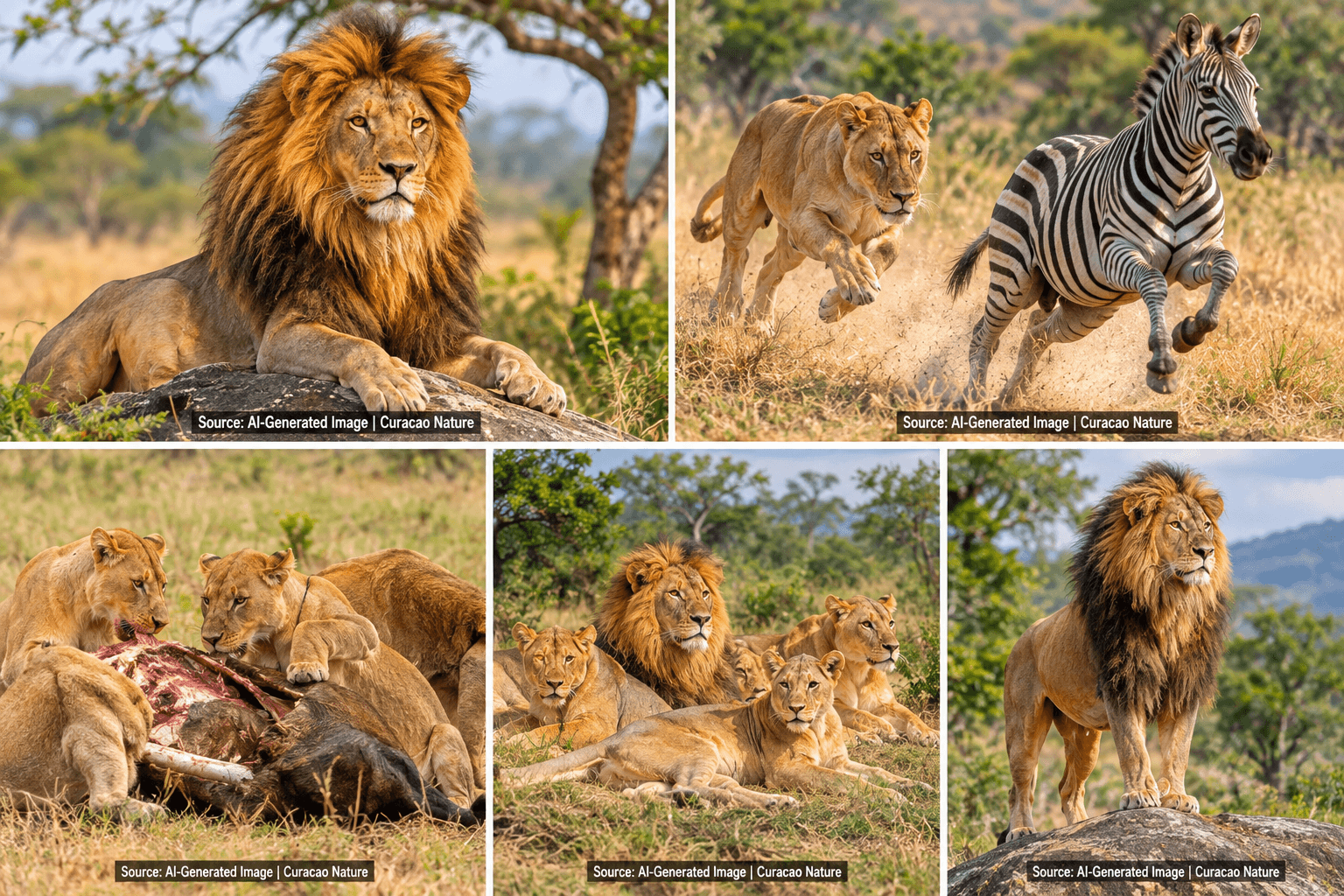
Lions primarily eat meat from other animals. Their most common prey includes large herbivores that live in African grasslands and savannas.
Animals lions may hunt include zebras, wildebeest, African buffalo, antelope, gazelles, warthogs, giraffes, young elephants, and other medium- and large-sized mammals. They may also eat smaller animals such as rodents, birds, and reptiles when larger prey is difficult to catch.
Not every lion population eats the same animals. Local prey availability strongly influences what a pride hunts. Research in Hwange National Park, Zimbabwe, found that prey use varied by season and that buffalo were important in the population studied. This finding should not be generalized to every lion population.
Common Animals in a Lion’s Diet
| Prey animal | Why lions hunt them |
| Zebras | Medium-to-large herbivores found in many African grasslands. |
| Wildebeest | Grazing animals that often move in large herds. |
| African buffalo | Large mammals that can provide substantial food. |
| Antelope | A diverse group of potential prey species. |
| Warthogs | Smaller mammals that may be vulnerable to ambush. |
| Giraffes | Large prey that lions may target under suitable conditions. |
| Young elephants | Occasionally targeted, especially when vulnerable. |
Do Lions Eat Zebras?
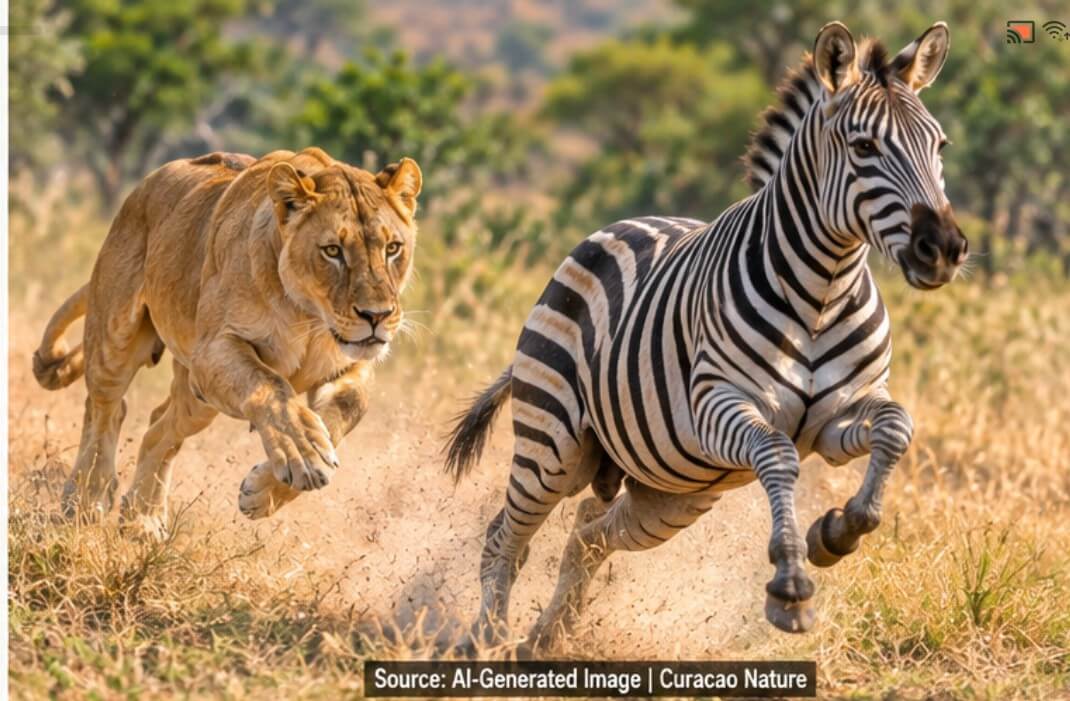
Yes. Zebras are among the animals lions commonly hunt in some African ecosystems. Zebras live in groups and use their speed, strong legs, and group awareness to avoid predators. Lions may take advantage of opportunities when a zebra becomes separated from its herd, injured, young, or otherwise vulnerable.
Lions often rely on stealth rather than a long chase. They try to approach as closely as possible before launching a short attack. Zebras can provide a substantial meal, but catching one is not guaranteed.
Do Lions Eat Wildebeest?
Yes. Wildebeest are an important food source for many African lions, particularly in parts of East Africa where large herds move across grasslands in search of food and water. Lions may target young animals, injured individuals, or wildebeest that become separated from their herds.
A herd can still be dangerous: adult wildebeest are strong and can injure predators with their horns and powerful bodies.
Do Lions Eat Buffalo?
Yes. African buffalo are important prey for some lion populations. Buffalo are large, powerful animals that can defend themselves with strong horns and coordinated group behavior. Hunting buffalo can be risky, especially for a lone lion, so lions may cooperate when attempting to capture one.
The importance of buffalo in a lion’s diet varies by ecosystem; research in Hwange found buffalo were frequently used prey in the population studied.
Do Lions Eat Giraffes?
Yes, lions can hunt and eat giraffes, although adult giraffes are difficult and dangerous prey. Giraffes have long, powerful legs and can deliver potentially fatal kicks. Lions may be more likely to target young or vulnerable giraffes.
Do Lions Eat Elephants?
Lions can occasionally prey on elephants, but they do not normally hunt healthy adult elephants. Young elephants may be more vulnerable, particularly when separated from their protective herd or during periods of environmental stress. Research in Zimbabwe has documented opportunistic predation on elephants, especially juveniles during a severe dry season. This is unusual behavior, not a regular feature of every lion’s diet.
Do Lions Eat Small Animals?
Yes. Although lions are famous for hunting large mammals, they can also eat smaller animals when opportunities arise, including hares, rodents, birds, reptiles, small antelope, and other animals they can capture.
How Do Lions Hunt for Food?
Lions are ambush predators. Instead of chasing prey over long distances, they usually try to approach quietly and attack at close range. Their hunting strategy involves several stages.
1. Finding Suitable Prey
Lions look for animals that offer a reasonable chance of success. They may focus on young, injured, isolated, or less alert individuals rather than the strongest member of a herd.
2. Approaching Without Being Seen
Lions use grass, bushes, trees, and other natural cover to hide their movements. They often hunt during cooler periods, including at night, around dusk, or near dawn.
3. Launching an Ambush
Once close enough, a lion makes a sudden attack. The objective is to catch the prey off guard and prevent it from escaping.
4. Working Together
Some lions hunt alone, but members of a pride can cooperate. Lionesses may approach prey from different directions, with some moving toward the target while others wait to intercept it.
5. Feeding After a Successful Hunt
After capturing prey, lions feed on the carcass. Several pride members may gather around the kill, and the remains can attract scavengers such as hyenas and vultures.
Do Male or Female Lions Hunt More?
Female lions, commonly called lionesses, generally perform much of the hunting in many prides. Their agility can help them move through grass and coordinate attacks. Male lions also hunt, although they may spend more time defending territory and protecting the pride. Their contribution varies according to the pride, prey, and circumstances. It is inaccurate to say that male lions never hunt.
How Much Do Lions Eat?
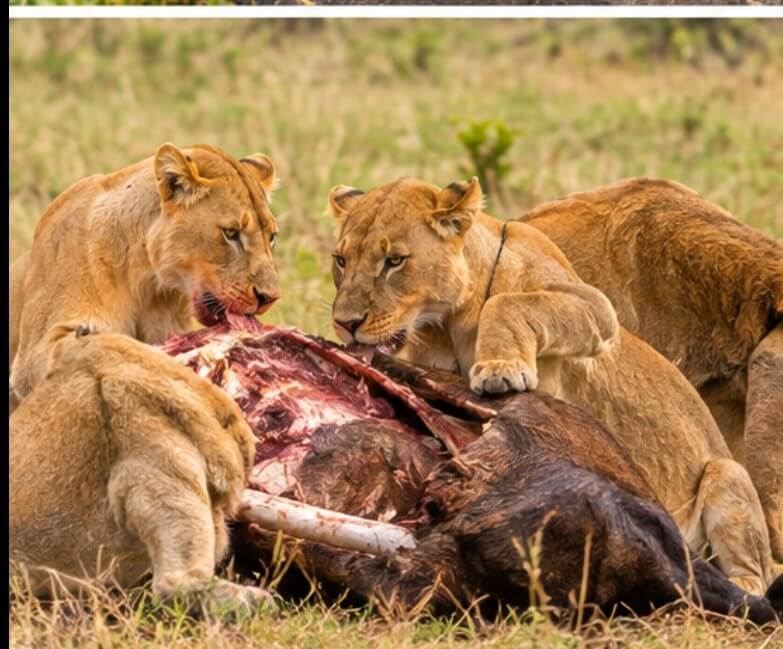
The amount of food a lion eats varies according to body size, age, activity, health, and access to prey. Lions do not necessarily eat the same amount every day. After a successful hunt, they may consume a large meal and then spend considerable time resting while digesting it.
Published estimates of daily food intake vary depending on whether they describe average consumption, food available to a pride, or a large feeding event. Treat broad figures as estimates rather than fixed daily requirements for every lion.
Factors That Affect How Much a Lion Eats
- Body size: larger lions generally need more food.
- Age: growing cubs and juveniles have different nutritional needs from adults.
- Activity: hunting and territorial behavior require energy.
- Food availability: lions may experience periods when prey is difficult to find.
- Pride size: several lions may feed from the same carcass.
Do Lions Eat Every Day?
Not necessarily. Lions may eat a large meal after a successful hunt and then go for a period without eating again. Feeding patterns depend on hunting success and food availability. A pride that captures a large animal may have enough food for several feeding sessions.
Do Lions Eat Other Predators?
Lions may kill and eat other carnivores when opportunities arise. Potential examples include hyenas, leopards, cheetahs, and African wild dogs. However, lions do not generally depend on other predators as their main food source; their diet is primarily made up of herbivorous mammals. Lions may also steal kills from other predators rather than hunting the animal themselves.
Do Lions Scavenge?
Yes. Lions are both hunters and scavengers. Scavenging means eating animals that have already died rather than capturing them through a hunt. Lions may feed on carcasses left by other predators or take over a kill from another animal. They also risk losing their own kills to competing predators, particularly when several hyenas are present.
Do Lions Eat Plants or Grass?
Lions are obligate carnivores. Their nutritional requirements depend primarily on animal-based food, so plants are not a substitute for their normal diet. Lions may occasionally be observed chewing grass, but this does not mean they are herbivores or that grass is a meaningful food source for them.
What Do Asiatic Lions Eat?
Asiatic lions survive in and around the Gir landscape in Gujarat, India. Like African lions, they are carnivores and eat other animals. Their prey includes deer, wild boar, antelope, and other available mammals. They may also prey on domestic cattle in areas where wildlife habitats overlap with human settlements. Their exact diet depends on the prey species available in their habitat.
How Does a Lion’s Diet Change With Its Habitat?
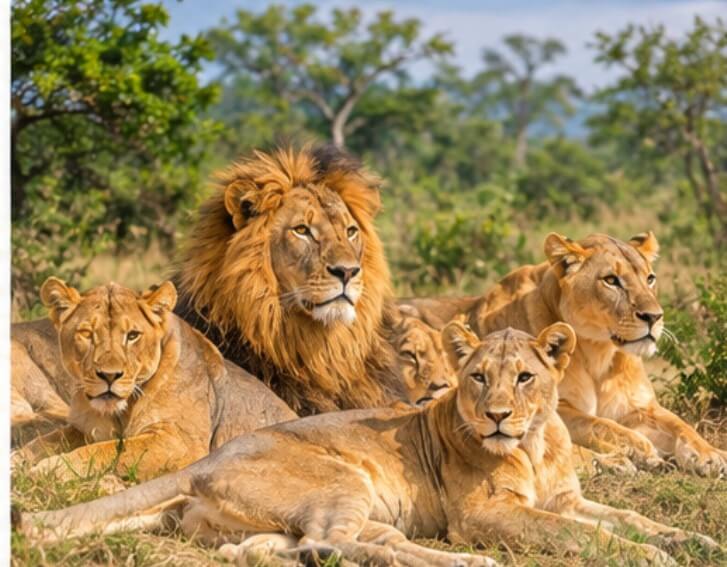
Lions are adaptable predators, but they cannot eat animals that are unavailable in their environment. Their diet changes according to local wildlife populations, seasonal conditions, and habitat characteristics.
| Habitat or region | Potential prey |
| East African grasslands | Wildebeest, zebras, and gazelles |
| Southern African savannas | Buffalo, antelope, and zebras |
| Dry savanna ecosystems | Buffalo, kudu, and smaller mammals |
| Gir landscape, India | Deer, wild boar, and antelope |
These are examples, not fixed menus. Two prides living in different parts of the same region may hunt different animals.
Why Are Lions Important to the Food Chain?
Lions play an important role in their ecosystems as large predators. By hunting herbivores and other animals, they contribute to the natural balance between predator and prey populations.
- Influencing the behavior and distribution of prey animals.
- Removing some vulnerable or less healthy individuals.
- Competing with other large predators for food.
- Providing carcasses that can support scavengers.
Lions are not the only animals that influence herbivore populations, and their effects vary between ecosystems. They are nevertheless important members of the food webs in which they live.
Frequently Asked Questions About What Lions Eat
What is a lion’s favorite food?
There is no single favorite food shared by all lions. Their prey varies by location and availability. Buffalo, wildebeest, zebras, and antelope are important food sources in different African ecosystems.
Do lions eat humans?
Lions can attack and sometimes kill humans, and there are documented cases of lions consuming human remains. However, humans are not their normal prey. Such incidents are uncommon compared with their regular hunting of wild mammals.
Do lions eat zebras and giraffes?
Yes. Lions commonly hunt zebras in some African ecosystems. They can also hunt giraffes, especially young or vulnerable individuals, although adult giraffes are dangerous prey.
Do lions eat other lions?
Lions may kill other lions during territorial conflicts, infanticide, or competition between groups. Cannibalism is not a normal part of their diet, although unusual cases of lions feeding on other lions can occur.
How long can a lion go without food?
There is no single reliable number that applies to every lion. Survival without food depends on health, age, body condition, access to water, and environmental conditions. Avoid treating claims about a fixed number of fasting days as universal biological facts.
Are lions carnivores or omnivores?
Lions are obligate carnivores. They rely on animal-based food to obtain the nutrients needed for survival.
Conclusion
Lions eat a wide variety of animals, but their diet mainly consists of medium- and large-sized mammals such as zebras, wildebeest, buffalo, antelope, and other herbivores.
They are adaptable hunters that use ambush tactics, cooperation, and opportunities created by their surroundings to find food. Their diets can change depending on habitat, season, and prey availability.
Understanding what lions eat also helps explain their role as top predators and why protecting their habitats is important for maintaining healthy ecosystem.