

A short clip from Hasan Piker’s October livestream — in which his dog Kaya yelps after Hasan appears to press a button — blew up overnight. Viewers interpreted that single moment as proof he used an electric shock collar to keep his dog “in frame.” PETA publicly weighed in, calling shock collars “dangerous and downright cruel,” while Hasan denied the accusation and demonstrated what he says is a vibration-only training collar. The internet split into two camps: outrage and defense — with everyone citing the same two minutes of footage. Newsweek
Below I’ll walk you through the facts we know, the gaps we don’t, what experts say about collars like the one in the clip, and how to judge viral moments like this without leaping to conclusions. I’ll be direct but fair: this is an ethics and evidence problem, not a rumor mill.
Contents
- 1 1) What the clip shows (and what it doesn’t)
- 2 2) Hasan Piker’s response: denial and demonstration
- 3 3) PETA’s statement — and why its voice matters
- 4 4) What veterinary and animal-welfare science says about shock collars
- 5 5) Evidence grading: how strong is the case, really?
- 6 6) Common counter-arguments — and answers
- 7 7) Wider context: streamers, spectacle, and pet welfare
- 8 8) Responsible next steps for the public and platforms
- 9 9) What PETA and vets recommend instead
- 10 10) The honest verdict — where we are now
1) What the clip shows (and what it doesn’t)

The viral clip, taken from a longer Twitch stream, captures a moment where:
-
Kaya — a dog who frequently appears on Hasan’s streams — shifts position off a raised platform.
-
Hasan is heard scolding the dog and appears to reach for a device on his desk.
-
Immediately afterward, Kaya emits a sharp yelp and moves back to her spot.
That sequence is what set off the reaction: viewers saw an action (press), an acute response (yelp), and interpreted cause-and-effect: press = shock. Multiple outlets summarized the sequence and the immediate online firestorm. Newsweek+1
What the clip does not provide (and why that matters): a clear, technical confirmation that the device delivered an electric shock. A short, low-resolution clip lacks forensic clarity: we can see a movement, we can hear a yelp, but we don’t have reliable telemetry (no device readout, no unambiguous prong contact footage, no independent witness at the exact moment). That matters because human brains are excellent at seeing causality where there may be coincidence.
2) Hasan Piker’s response: denial and demonstration
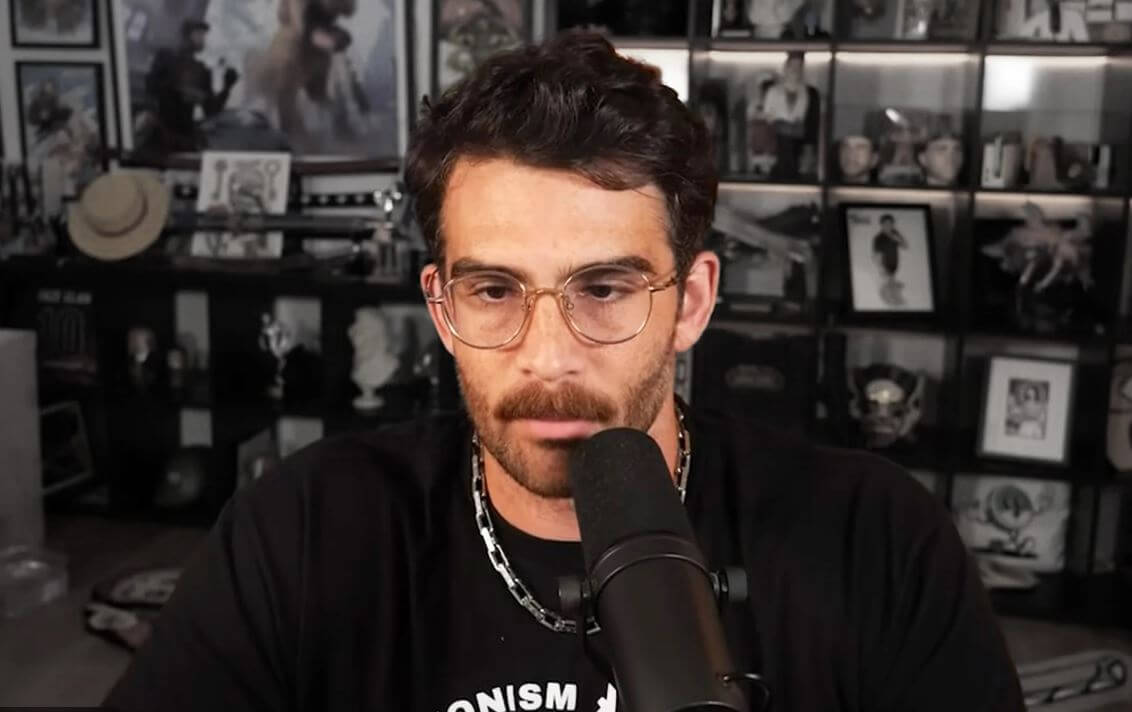
Hasan responded on stream and in follow-ups. He has said:
-
Kaya wears a behavior-modification collar that, he claims, only has a vibration mode (and an AirTag).
-
He insists the yelp was caused by Kaya “clipping” a dewclaw or otherwise stepping awkwardly — not by an electrical stimulus.
-
On a later stream he held up the collar and activated what he described as the vibration feature to show it “works that way.”
Those denials and the on-camera demo are important: Hasan is a public figure who directly addressed the accusation on his platform. Outlets that tracked the event summarize his immediate defense and the demonstration he made for viewers. Forbes+1
Still: a creator demonstrating a device on camera is not the same as an independent forensic test. Removing or covering prongs, swapping attachments, or showing only a vibration button can reduce—but not eliminate—reasonable doubt, depending on what exactly is presented. We’ll dig into why that matters in the analysis section.
3) PETA’s statement — and why its voice matters
PETA issued a public comment, saying, in essence: if the collar was used to shock the dog, that would be cruel and dangerous; shock collars can cause burns, chronic anxiety, and aggression, and positive reinforcement is a better option. PETA made the comment publicly, which pushed the story from a streamer controversy to an animal-welfare headline.
Why PETA’s involvement escalates the story: organizations like PETA (and national veterinary groups) carry reputational weight in animal-welfare discussions. A PETA statement signals that the incident is not merely “internet drama” but a welfare question — and that prompts more reporting, more calls for investigation, and more public scrutiny.
4) What veterinary and animal-welfare science says about shock collars

This is where the conversation needs grounding in expertise, because the ethical stakes depend on actual harm and risk.
Leading animal-behaviour and welfare bodies advise caution or outright reject e-collars (shock collars) as routine training tools. For example, the American Veterinary Society of Animal Behavior (AVSAB) recommends reward-based training and advises avoiding tools that rely on pain or fear, including electronic shock collars, because evidence shows they can increase anxiety and aggressive responses and undermine learning in some contexts. avsab.org
Similarly, organizations such as the RSPCA and many national vet associations oppose—or seek restrictions on—the use of shock or prong collars on welfare grounds. They point to physical (burns, skin irritation) and psychological harms (heightened fear, stress, and risk of displaced aggression). These positions explain why a PETA statement receives amplified attention: mainstream veterinary science is aligned with caution. kb.rspca.org.au
Put simply: if a device is an electric shock collar (rather than vibration-only), the consensus among many welfare organizations is that it is a problematic training tool and should be avoided unless there is a very strong justification and professional oversight.
5) Evidence grading: how strong is the case, really?

When an event goes viral, separate two things: (A) the evidence in the clip, and (B) the context (past remarks, the object’s look, how the owner reacts afterward). Both matter — but they carry different weights.
A. Direct visual evidence — low-to-moderate strength.
-
The clip shows timing consistent with someone pressing a device and a dog yelping. That is suggestive, but not conclusive. Short video clips can be misleading about timing and contact. Without a clearer shot of the collar’s electrodes or a device readout, the clip is ambiguous.
B. Owner demonstration and denials — low-to-moderate strength.
-
Hasan demonstrated the collar and said it vibrates. A live demo reduces the suspicion for some viewers. For others, a demonstration by the owner is unconvincing because it’s not independently verified, and because modifications (like removing prongs) can be made.
C. Corroborating history — variable strength.
-
Past statements by a creator about owning or using certain tools can increase suspicion. Conversely, a documented history of responsible pet care would cut against it. Social media carried resurfaced clips and quotes, some of which were invoked by critics; these matter, but every historical clip must be verified in context.
D. Expert opinion on device type — moderate strength.
-
Experts say shock collars can harm animals; if the device is an e-collar, the ethical problem is concrete. But whether the specific device used in the clip was delivering a shock remains the pivotal question.
So: we have suggestive footage + a serious expert consensus that, if true, this behavior would be harmful. But we lack the kind of independent, forensic confirmation — device inspection, high-resolution unedited VOD of the moment, or veterinary exam — that would convert suspicion into demonstrated wrongdoing.
6) Common counter-arguments — and answers
Claim: “He demonstrated the collar; problem solved.”
Counter: A producer demonstrating a device on their own stream helps their case, but it isn’t an independent test. It reduces probability of intentional cruelty for some viewers, but it doesn’t prove the device couldn’t be modified or that the owner didn’t sometimes use a different setting.
Claim: “The green light proves it’s a shock collar.”
Counter: Lights on collars can indicate many things: Bluetooth pairing, battery, or a vibration indicator. Yes, some e-collars have similar lights — but a matching light alone is circumstantial.
Claim: “If he used it, he’s a monster.”
Counter: Emotional reaction is understandable. Ethically, though, we should distinguish between verified abuse (which needs accountability) and troubling, but unverified, footage. Judicial or administrative outcomes (investigations, charges) should rely on evidence beyond the viral clip.
7) Wider context: streamers, spectacle, and pet welfare
Why do these incidents happen and why do they explode? A few structural reasons:
-
Incentives on live platforms: pets are content magnets. Streamers may be tempted to keep an animal positioned for the camera. That incentive can lead to questionable training choices if the owner is inexperienced or prioritizes a shot over welfare.
-
24/7 recording + short clips: long form streams are routinely clipped; short excerpts decontextualize behavior and make it easier to form a damning narrative.
-
Public figure dynamics: creators with millions of followers have reputations that amplify scrutiny. When something looks wrong, critics and advocacy orgs react quickly; that accelerates the story.
-
Animal-welfare awareness: viewers today are more attuned to signs of animal distress, and organizations like PETA and AVSAB know how to move public conversation from outrage to policy.
This incident sits at the intersection of those forces: a micro moment of harm (or perceived harm) became a megaphone for a broader debate about how creators treat animals on camera.
8) Responsible next steps for the public and platforms
For viewers who care about animal welfare, here are practical, responsible actions — ordered from least to most escalatory:
-
Watch the uncut VOD before judgment. Short clips mislead. A full-length VOD may show context or subsequent checks.
-
Listen to verified reporting. Reputable outlets will try to corroborate statements and get responses.
-
Contact the platform if you suspect real harm. Twitch has reporting tools for animal abuse; if there is a reasonable belief of harm, reporting triggers an investigation.
-
If you’re local and a credible case exists, contact animal control. For serious, verifiable abuse, local authorities are the right channel.
-
Support welfare-oriented organizations and experts. Donate or volunteer for groups that promote reward-based training and animal protection.
Importantly: public shaming without verification can harm people and animals — it’s better to combine moral urgency with procedural prudence.
9) What PETA and vets recommend instead
If the underlying worry is that shock collars are used to control pets for content, experts suggest humane alternatives:
-
Reward-based training: food rewards, clicker training, and shaping behavior through positive reinforcement (AVSAB recommends this approach).
-
Environmental adjustments: platforms, bedding, exercise breaks, or supervised confinement can keep a pet safe without aversive tools.
-
Professional trainers: consult certified, force-free trainers for stubborn behaviors rather than resorting to aversive devices. avsab.org+1
These refinements do two things: they protect animal welfare and they remove the moral hazard of “convenient” content control.
10) The honest verdict — where we are now
-
We have a suggestive clip: a button press followed by a yelp. That’s legitimate cause for concern and investigation. Newsweek
-
We have a creator’s denial and demo: Hasan publicly denied using a shock setting and showed a vibration mode. That complicates simple conclusions. Forbes
-
We have expert consensus that if an electric shock collar was used, it’s ethically problematic and potentially harmful; many veterinary and animal-welfare bodies counsel against their routine use. avsab.org+1
-
We do not yet have independent forensic proof (device inspection, unedited forensic footage, vet exam) that conclusively shows the collar delivered an electrical shock at that moment.
So: it’s reasonable to be alarmed and to press for answers; it is not responsible to convict based on a short clip and one owner’s demo. The right response from media, platforms, and viewers is scrutiny, not certainty.