

Penguins are some of the most recognizable and fascinating birds on Earth. Although they cannot fly through the air, these remarkable seabirds are excellent swimmers and divers. Their streamlined bodies, powerful flippers, waterproof feathers, and unusual breeding behaviors help them survive in some of the world’s most challenging environments.
Many people associate penguins exclusively with Antarctica, but these birds live in several different regions of the Southern Hemisphere. Some inhabit icy coastlines, while others live on temperate islands, rocky shores, and even tropical islands near the equator.
But how much do you really know about penguins?
In this guide, discover 15 amazing penguin facts, including where penguins live, what they eat, how they swim, how they raise their chicks, and the conservation challenges they face.
1. Penguins Are Flightless Seabirds
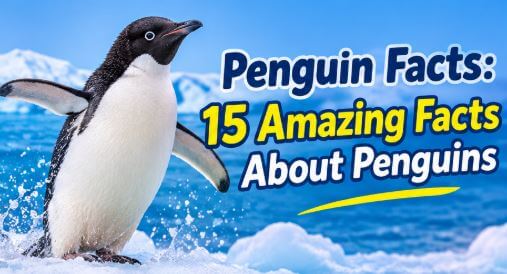
Penguins belong to the bird family Spheniscidae. Unlike most birds, they cannot fly through the air. Instead, their wings have evolved into stiff, powerful flippers that help them move efficiently underwater.
Their bodies are streamlined, allowing them to reduce resistance as they swim. Their short legs and webbed feet help them steer while moving through the water.
Although penguins may look awkward when walking, they are highly adapted to life in the ocean.
2. Penguins Are Excellent Swimmers
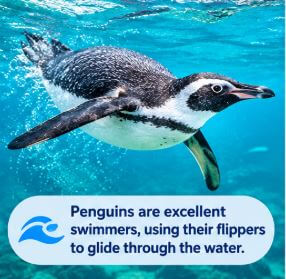
One of the most impressive penguin facts is their ability to swim. Their flippers act like underwater wings, helping them propel themselves through the ocean.
Depending on the species and conditions, some penguins can reach swimming speeds of approximately 15 miles per hour.
Penguins use their feet and tails to steer, change direction, and maintain balance. Their streamlined bodies also help them move quickly while chasing fish and other prey.
3. Penguins Do Not Live Only in Antarctica
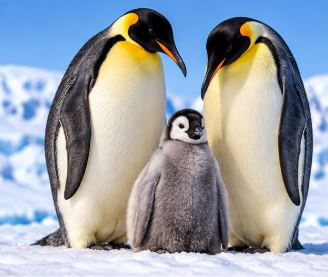
Many people imagine penguins surrounded by snow and ice. However, penguin habitats are much more diverse than most people realize.
Different species live in:
- Antarctica and nearby islands.
- Subantarctic islands.
- Coastal regions of South America.
- Southern Africa.
- Australia and New Zealand.
- The Galapagos Islands near the equator.
The Galapagos penguin is particularly unusual because it lives close to the equator. This demonstrates how penguins have adapted to environments with very different temperatures.
4. There Are Several Different Penguin Species
Penguins belong to one bird family, but they include several species with different sizes, colors, behaviors, and habitats. The exact number can vary depending on taxonomic classification.
Some well-known penguins include:
- Emperor Penguin: The largest living penguin species, famous for breeding during the Antarctic winter.
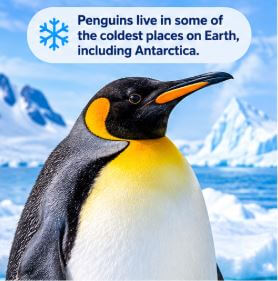
- King Penguin: A large species with distinctive orange-yellow markings around its head and upper chest.
- Adelie Penguin: An Antarctic species recognized by its black head and white eye rings.
- Gentoo Penguin: Easily recognized by its orange-red bill and white patch above its eyes.
- African Penguin: A coastal species found in southern Africa.
- Little Penguin: The smallest living penguin species, native to Australia and New Zealand.
5. Penguins Have Special Feathers That Keep Them Warm
Penguins have dense, overlapping feathers that help protect their bodies from cold water and harsh weather.
Their feathers are waterproof and help trap a layer of air close to the skin, providing insulation. Penguins also have a layer of body fat that helps reduce heat loss in cold environments.
These adaptations are especially important for species that live in Antarctica, where temperatures can become extremely low.
6. A Penguin’s Black-and-White Color Helps With Camouflage
Most penguins have dark backs and white bellies. This coloring is a form of camouflage known as countershading.
When viewed from above, a penguin’s dark back blends with the darker ocean water. When viewed from below, its white belly blends with the brighter surface of the water.
This makes it more difficult for underwater predators to spot penguins while they swim.
7. Penguins Eat Fish, Krill, and Squid
Penguins are carnivorous birds that feed mainly on marine animals. Their diet varies according to species, location, season, and food availability.
Common penguin foods include:
- Fish such as anchovies and sardines.
- Krill and other small crustaceans.
- Squid.
- Small marine invertebrates.
Some Antarctic penguins depend heavily on krill, while other species consume larger proportions of fish and squid.
Because penguins rely on marine food sources, changes in ocean conditions can affect their ability to find enough food.
8. Emperor Penguins Are the Largest Penguin Species
The emperor penguin is the largest living penguin species. Adults can reach approximately 4 feet tall and weigh considerably more than smaller penguin species.
They are easily recognized by their large bodies, black backs, white bellies, and yellow-orange markings around the neck and upper chest.
Emperor penguins live in Antarctica and are specially adapted to survive extreme cold. Their dense feathers, body fat, and social behaviors help them maintain body heat.
9. Little Penguins Are the Smallest Penguin Species
The little penguin, also called the little blue penguin or fairy penguin, is the smallest living penguin species.
Adults generally stand around 13 inches tall and weigh approximately 2 to 3 pounds, although measurements vary.
Unlike emperor penguins, little penguins inhabit relatively mild coastal environments in Australia and New Zealand.
Their small size and blue-gray feathers make them easy to distinguish from larger penguin species.
10. Penguins Can Dive Deep Underwater
Penguins are skilled divers that can travel beneath the ocean surface to search for food.
Their diving abilities vary considerably by species. Emperor penguins are especially impressive divers and can reach depths of more than 1,500 feet under suitable conditions.
Several adaptations help penguins dive:
- Streamlined bodies that reduce water resistance.
- Strong flippers for underwater movement.
- Specialized oxygen storage and management.
- Physiological adjustments that help conserve oxygen during dives.
These abilities allow penguins to reach prey that may be unavailable to other seabirds.
11. Emperor Penguin Fathers Help Incubate the Eggs
One of the most remarkable penguin facts involves emperor penguin parenting.
After the female lays a single egg, she carefully transfers it to the male. The male balances the egg on his feet and covers it with a warm fold of skin called a brood pouch.
During the Antarctic winter, the male protects the egg from freezing temperatures while the female travels to the ocean to feed.
He may go without food for an extended period while incubating the egg. When the female returns, the parents take turns caring for and feeding the chick.
12. Penguins Live and Breed in Large Colonies
Many penguin species gather in large breeding colonies called rookeries.
These colonies can contain thousands or even hundreds of thousands of birds. Living in groups helps penguins find mates, protect nesting areas, and raise their chicks.
However, crowded colonies can also create competition for nesting sites and food.
Parents recognize their chicks through distinctive calls, allowing them to find one another in noisy breeding colonies.
13. Penguins Sometimes Slide on Their Bellies
Penguins are known for a movement called tobogganing. Instead of walking, they lie on their bellies and push themselves forward using their flippers and feet.
This behavior is especially useful on snow and ice because it can help penguins travel while reducing the effort required to walk.
Although it may look playful, tobogganing is an effective way to move across suitable icy surfaces.
14. Penguins Face Predators in the Ocean
Although penguins are skilled swimmers, they are not at the top of every marine food chain.
Common predators include:
- Leopard Seals: Powerful marine predators that hunt penguins near Antarctic waters.
- Orcas: Highly intelligent predators that may hunt penguins in some regions.
- Sharks: Certain shark species may prey on penguins.
On land, penguin eggs and chicks may also be threatened by seabirds and other predators, depending on the species and location.
Penguins often rely on group behavior, alertness, and quick swimming to reduce the risk of being caught.
15. Many Penguin Species Face Conservation Challenges
Penguins face several environmental and human-related threats. Although the conservation status differs between species, many populations are under pressure.
Important threats include:
- Climate Change: Changes in sea ice, ocean temperatures, and marine ecosystems can affect food availability and breeding habitats.
- Commercial Fishing: Fishing activity can reduce the availability of prey and may cause accidental capture.
- Pollution: Oil spills, plastic waste, and other pollutants can damage marine habitats.
- Habitat Disturbance: Coastal development and human activity may affect breeding colonies.
- Disease: Infectious diseases can threaten vulnerable colonies.
Protecting marine ecosystems, reducing pollution, and managing fishing activities responsibly are important steps toward supporting penguin populations.
Why Are Penguins Important to the Marine Ecosystem?
Penguins play an important role in marine food webs. They consume fish, squid, and crustaceans and are also an important food source for some marine predators.
Because penguins depend on healthy oceans, changes in their populations can provide useful information about the condition of marine ecosystems.
Protecting penguins also means protecting the wider ocean environments on which many other species depend.
Frequently Asked Questions About Penguins
1. Can penguins fly?
No. Penguins are flightless birds. Their wings have evolved into flippers that help them swim and dive underwater.
2. Where do penguins live?
Most penguins live in the Southern Hemisphere. Their habitats include Antarctica, subantarctic islands, southern Africa, South America, Australia, New Zealand, and the Galapagos Islands.
3. What do penguins eat?
Penguins mainly eat fish, krill, squid, and other small marine animals. Their diet varies by species and location.
4. How fast can penguins swim?
Some penguin species can reach swimming speeds of approximately 15 miles per hour, although their speed varies with species and conditions.
5. What is the largest penguin species?
The emperor penguin is the largest living penguin species. Adults can reach approximately 4 feet in height.
6. What is the smallest penguin species?
The little penguin is the smallest living penguin species. It is native to Australia and New Zealand.
7. Do penguins live in warm places?
Yes. Some penguins live in temperate and relatively warm environments. The Galapagos penguin, for example, lives near the equator.
8. Do penguins mate for life?
Some penguin species form long-term pair bonds, but mating behavior varies. A pair may stay together for several breeding seasons, while other penguins change partners.
9. How do penguins stay warm?
Penguins use dense waterproof feathers, insulating body fat, and behavioral adaptations such as huddling to reduce heat loss.
10. Are penguins endangered?
Conservation status varies by species. Some penguin species are threatened, while others have healthier populations. Climate change, fishing pressure, pollution, and habitat disturbance are important concerns.
Final Thoughts
Penguins are remarkable seabirds with adaptations that allow them to thrive in environments ranging from icy Antarctic coastlines to tropical islands.
Although they cannot fly, their swimming and diving abilities make them some of the most specialized birds in the ocean. Their unique breeding behaviors, social colonies, and feeding strategies make them fascinating animals to study.
However, penguins depend on healthy marine ecosystems. Protecting their habitats, reducing pollution, and supporting responsible fishing practices are essential for their long-term survival.
Learning these amazing penguin facts is a great way to understand why these extraordinary birds deserve our attention and protection.
References
- Smithsonian Ocean – Penguins
- National Geographic – Penguins: Facts and Photos
- World Wildlife Fund – Penguins
- BBC Earth – Penguin Facts
- Woods Hole Oceanographic Institution – Facts on Penguins
- National Geographic – King Penguin
- PBS Nature – Penguin Fact Sheet