

Thirty-nine years after the 1986 nuclear disaster, the free-roaming dogs of the Chernobyl Exclusion Zone (CEZ) remain one of the most compelling biological subjects on the planet. Descendants of pets abandoned during the hasty evacuation, these canines have become a symbol of survival and a unique, living laboratory for scientists studying the long-term effects of chronic, low-level radiation exposure. Recent news and scientific studies, particularly in late 2024 and early 2025, offer fresh insights into their unique genetic makeup and ongoing ecological challenges.
Contents
🧬 Genetic Insights: No Sign of Radiation-Induced Mutation
A major focus of recent research has been on the genetic difference observed between the Chernobyl Dogs population near the Nuclear Power Plant (NPP) and those in the nearby Chernobyl City. While the radioactive environment seemed the most obvious cause, a key study published in early 2025 by scientists from North Carolina State University and Columbia University delivered a surprising finding:
Radiation is Not the Primary Driver: The study found no evidence of an increased DNA mutation rate that could be definitively attributed to the chronic low-level radiation exposure.
Selective Pressure is Key: Instead of mutations, researchers suggest that the genetic distinctions likely result from selective pressures. Early survivors likely possessed advantageous traits that helped them thrive in the toxic, isolated environment, and these traits were passed down through generations. This suggests a process of rapid evolution and adaptation driven by the harsh environment and geographic isolation, rather than direct, disruptive mutation from radiation.
The Chernobyl Dogs remain a unique and invaluable resource for genomic study, offering a direct comparison between two closely related but environmentally distinct dog populations.
🚨 Current Status and Humanitarian Efforts
The population of dogs in the Chernobyl Exclusion Zone is estimated to be over 700, with two main geographically distinct groups: one near the power plant and one in Chernobyl City. Their lives are short, averaging just 3-6 years due to harsh conditions, malnutrition, and threats from wildlife, especially rabid wolves.
The non-profit organization Clean Futures Fund (CFF), through its Dogs of Chernobyl program, continues to be the primary care provider for these animals:
Population Control and Health: CFF runs essential spay, neuter, and vaccination campaigns to control the stray population and protect them against rabies, a constant threat from wild animals in the zone. Over 1,000 dogs and cats have been sterilized since the program began in 2017.
Worker Support: The dogs often rely on the 3,500 people who work daily in the CEZ for scraps of food and basic care. The dogs, in turn, offer companionship and a sense of normalcy in the otherwise desolate landscape.
Important Note: The Dogs of Chernobyl program has previously run limited adoption initiatives, but according to their latest updates, Chernobyl dogs are NO LONGER available for adoption due to logistical and ongoing health concerns related to their unique environment.
🎨 The Mystery of the “Blue Dogs”
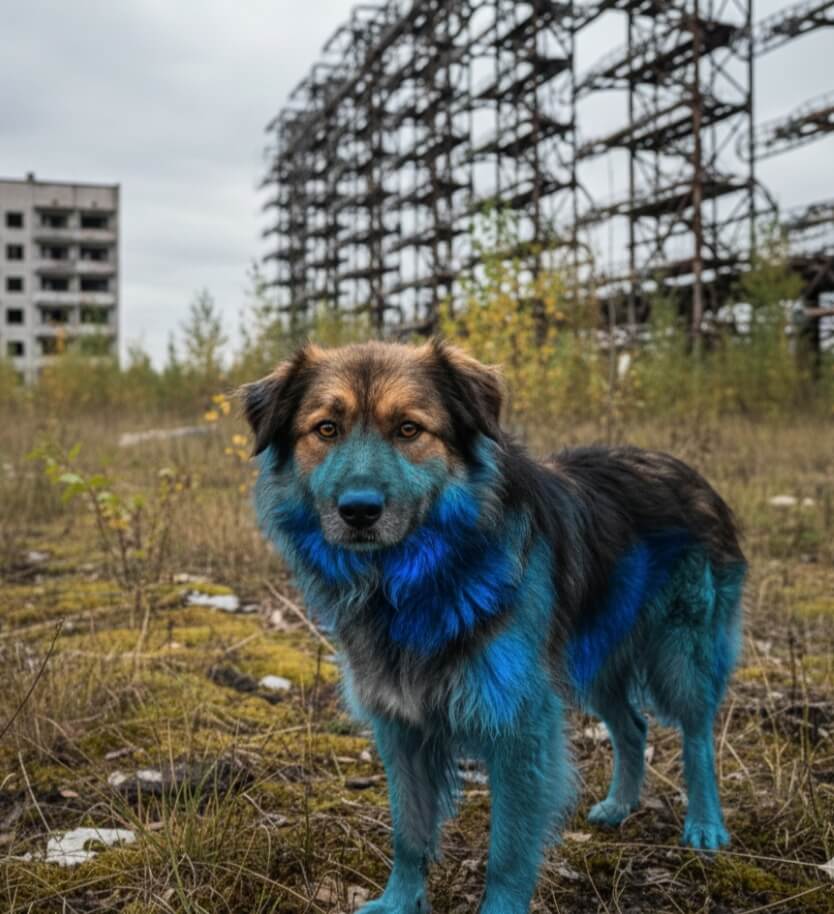
In late 2025, the dogs made international headlines when several canines were spotted with patches of bright blue fur near the NPP site.
Initial Concern vs. Explanation: This unusual coloring sparked public worry about radiation or other chemical contamination. However, experts from the CFF, including veterinarians working on-site, offered a more grounded theory. They believe the dogs may have come into contact with old chemical residue from the abandoned site, possibly old paint or chemical sludge.
Not a Health Alert: While the specific cause of the blue color is being investigated, the dogs spotted appeared healthy, and the mystery is not currently viewed as an immediate radiation-induced health crisis.
💡 Conclusion: A Beacon of Resilience
The Chernobyl Dogs represent a fascinating case study in environmental biology and adaptation. Far from being mutated monsters, recent science indicates they are highly resilient animals undergoing a process of rapid evolution in an isolated, high-stress environment. The ongoing work by humanitarian organizations ensures their population is stable, healthy, and contained, allowing them to continue their unplanned, decades-long journey as the ghost-town’s furry, enduring residents.